Most in-store technology dies quietly at week six. Not because it failed a technical test, but because associates stopped opening it. Adoption, not functionality, is the real acceptance criterion in retail – and almost nobody scopes a pilot around it.
Large chains run technology pilots constantly. The success rate of moving from pilot to full rollout is far lower than the vendor pipeline suggests, and the reason is rarely technical. The systems work. People stop using them.
A store associate has a shift structured around physical tasks. Anything that adds a step to that shift gets dropped as soon as the pilot supervision ends. This is not resistance to change. It is a rational response to a tool that costs more time than it returns.
Why adoption collapses
The pattern repeats across formats:
- The tool assumes a desk. It is designed for someone sitting down, then handed to someone walking twelve kilometres a shift.
- It duplicates work. The associate now does the task and then records the task.
- The value goes upward, not sideways. The head office gets a dashboard. The associate gets an extra obligation.
- Onboarding depends on one enthusiast. When that person changes shift or leaves, usage falls off a cliff.
The mechanism is straightforward: a tool is adopted when it removes a step, and abandoned when it adds one. Everything else – interface quality, feature depth, training hours – is secondary to that single test.
What a 95% number actually means
95% of associates continuing to use the technology after the pilot period is not a satisfaction score. It means the tool stopped being an initiative and became part of how the shift runs. It means associates use it when nobody is measuring them.
Reaching that requires designing for the floor rather than for the demo:
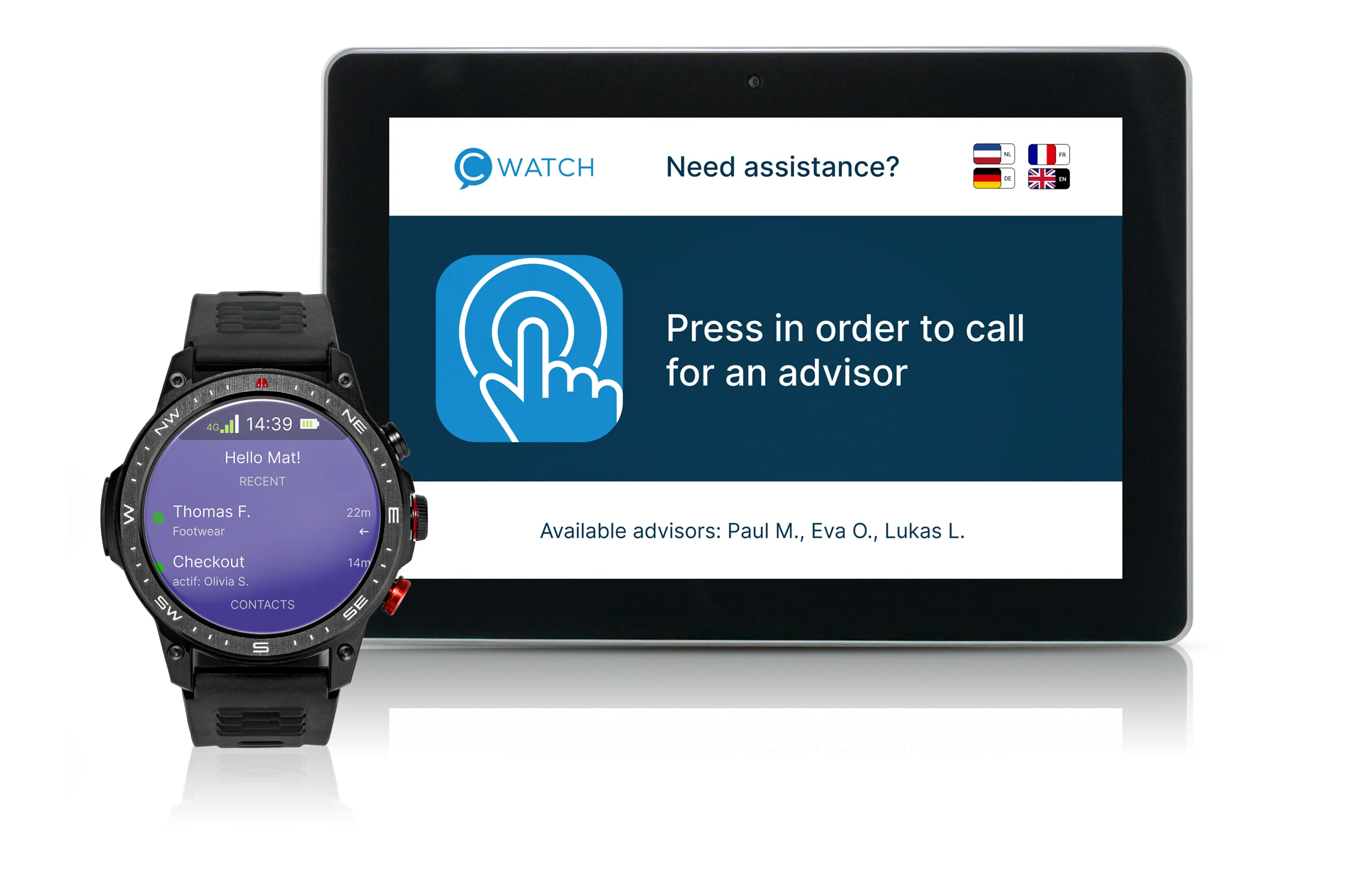
- It runs on the device the associate already carries.
- It replaces radio traffic and manual checks instead of sitting alongside them.
- It gives the associate the answer, not just the reporting obligation.
- It works from day one without a training programme.
This is what large retailers buy on
Chains such as Decathlon, Carrefour, MediaMarktSaturn and XXXLutz did not adopt the strength of a deck. They adopted it because the operational case was held up on the floor, in their own stores, with their own staff.
The lesson for anyone selling into retail is unglamorous. The pilot question is not whether the technology works. It is whether people are still opening it in week twelve, when the pilot team has gone home.