This is not a footfall problem. These are customers who walked in with clear intent, found the shelf, had one question and found no one to ask. The lost margin is on a basket that was already halfway to the checkout.
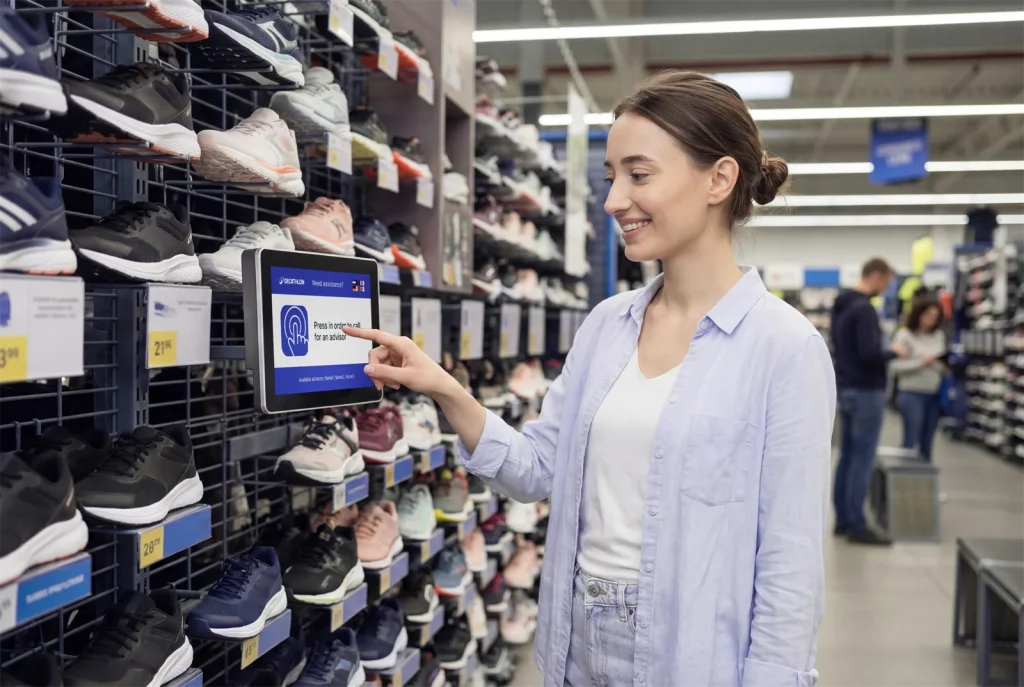
One in four DIY customers walks out without buying if they do not get help at the shelf within a few minutes. They came in to buy. They located the aisle. They stood in front of the product with a question about a size, a variant or a compatible part – and there was no one there to answer it.
Every metric a store manager watches would call this a good visit. Traffic came in, the product was in stock, the display was correct. The basket still ended at zero.
There will not be more associates
The instinctive fix is headcount. It is also the one fix that is not available. Every large-format retailer is holding labour costs flat or reducing them, and that will not reverse in the next planning cycle.
So the question is not how to hire more people. It is how to free up the time of the people already on the floor.
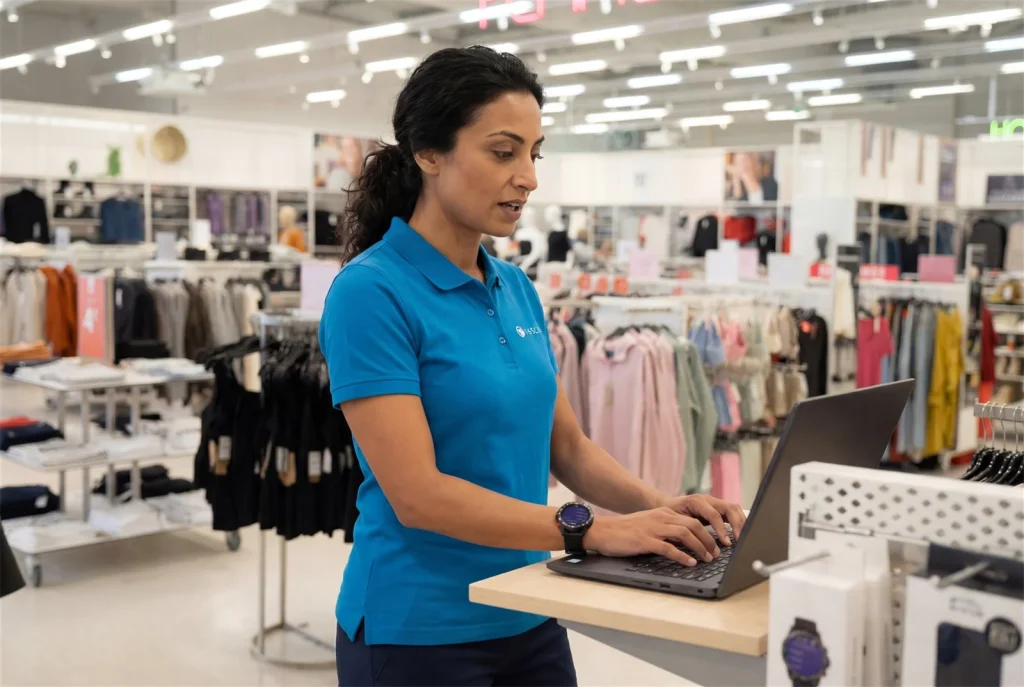
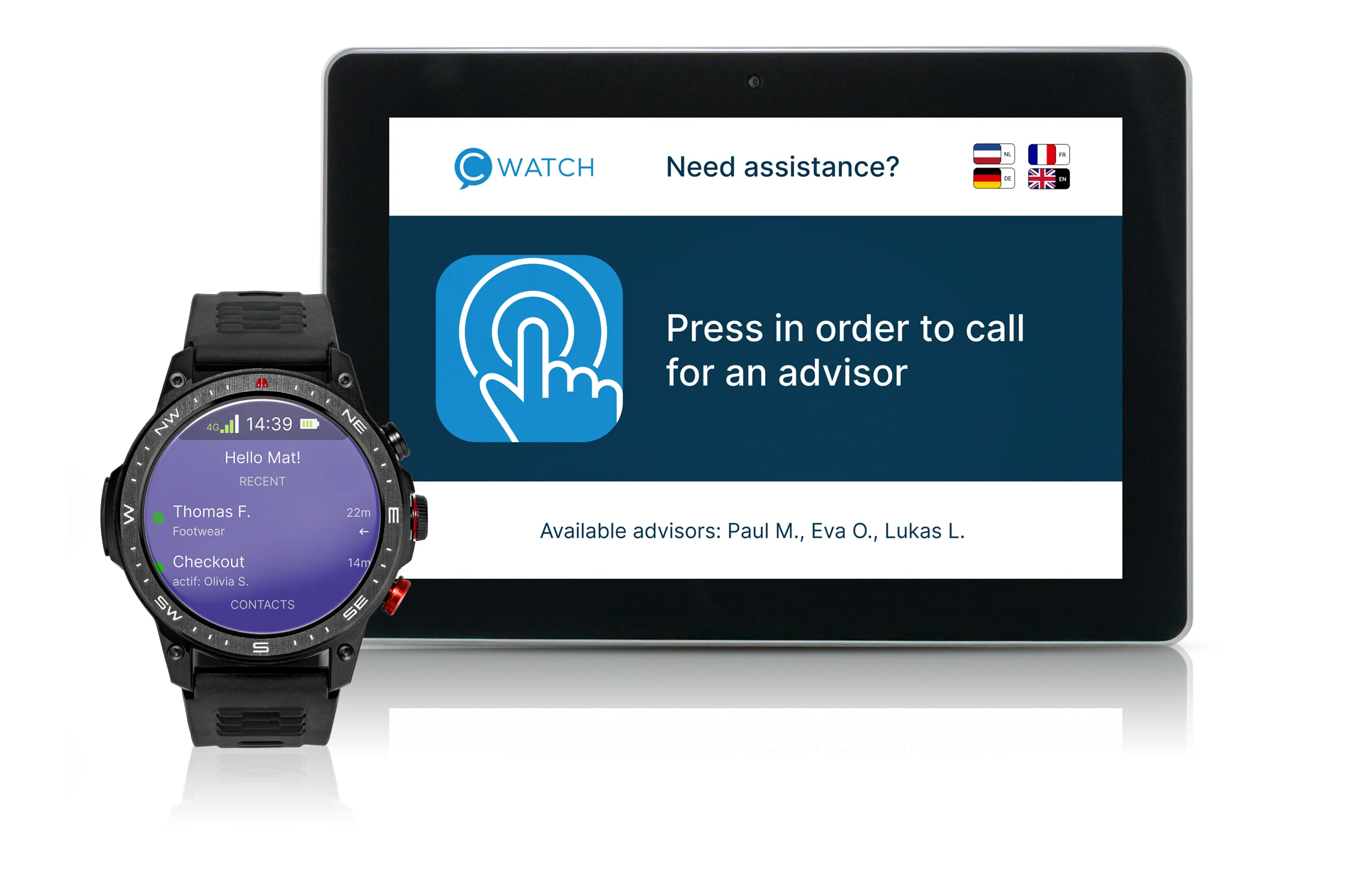
The first move is to take operational tasks off associates – stock checks, price checks, task confirmations, radio traffic – so they spend more of the shift with customers. This works, and it has a hard ceiling. Even a well-organised team cannot reach every customer at every shelf before the product goes back down.
Most shelf questions do not need an expert
This is the part that gets missed. The questions that stop a sale at the shelf are overwhelmingly logistical, not technical:
- whether the item is in stock
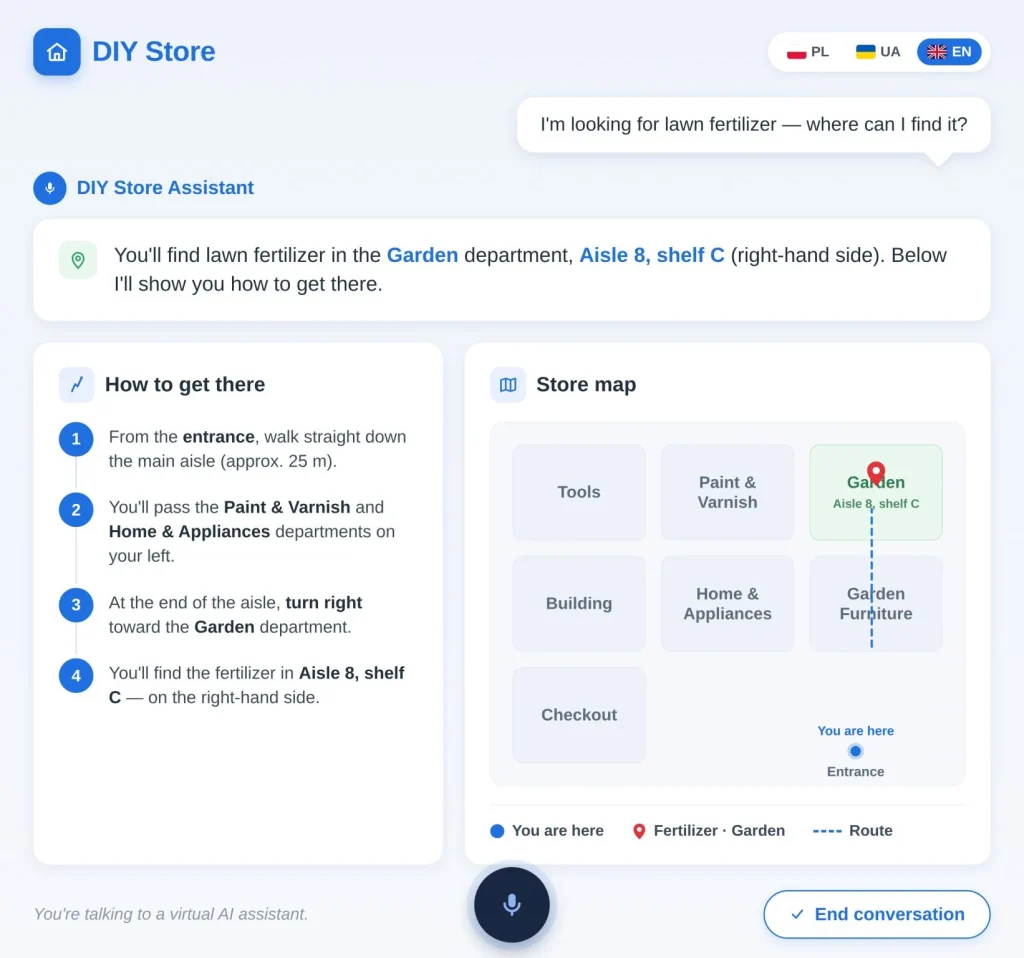
- which aisle and shelf it is on
- what the closest alternative is when a variant is out
None of these require twenty years of trade knowledge. They require access to data the store already holds. The mechanism behind the lost sale is knowledge concentration: information that exists in the system is only reachable through a human being who is currently three aisles away.
Let the customer answer the easy 80%
If customers resolve those questions themselves, at the point where the question occurs, the associate is freed for the 20% that actually moves basket size – the conversation about the project rather than the conversation about where the masking tape is.
That is the difference between a store that answers questions and a store that sells. The conversation about the project is worth EUR 60 to EUR 120 in the basket. The conversation about masking tape is worth nothing and consumes the same five minutes.
The next phase of in-store AI will not be about smarter models. It will be about putting an answer where the customer is standing, in the language they speak, at the moment they are deciding whether to buy or put the product back.